

The Köln Concert has sounded like itself for fifty years. The hi-res editions have decided that's a problem.
You may have heard the story behind The Köln Concert already. But let me repeat it briefly, as I think it sheds some light on the mastering decisions behind hi-res editions of this album.
On 24 January 1975, Keith Jarrett sat down in the Cologne Opera House and improvised for nearly an hour.
But nothing was as wonderful as it may seem. For one, the piano was wrong. Tinny in the upper registers, weak in the bass, and with pedals that barely functioned.
Unlike his later approach to just abandon the performance in such situations, Jarrett adapted. First, he concentrated on the middle register. Used pedals more sparingly, too. And what came out was something that even today amazes audiences with its coherence and almost meditative atmosphere.
Fifty years on, The Köln Concert remains the best-selling solo piano album in jazz history, and it still holds.
Unfortunately, it seems that the mastering teams behind the hi-res editions decided it's not enough.
(Disclaimer: I haven't heard the original LP edition of The Köln Concert. However, I can imagine what it must have sounded like by the lossless edition, and also, an old physical CD edition I own, and I've based my comparison on that as well.)
What to listen for
- Hall sound
- Tone
- Transients
Editions
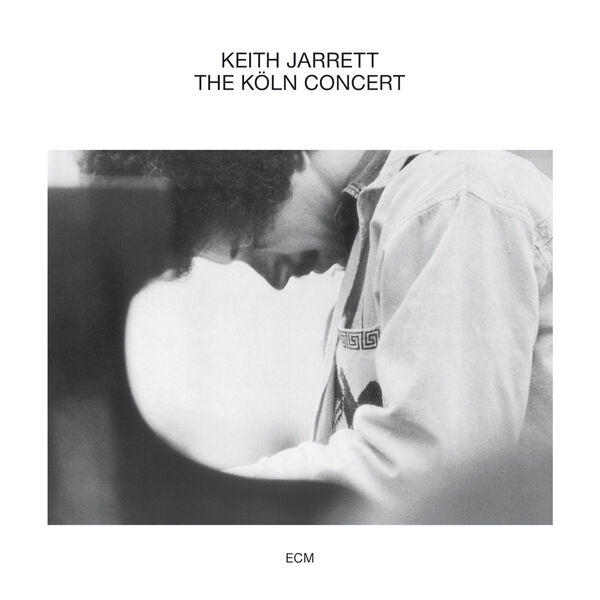
- Label:
- ECM
- Year:
- ?
- Format:
- 16/44.1 FLAC
- Source:
- unknown - no official info from the label
This is the standard, lossless edition of the album.
This is by far, the warmest and quietest of the three digital editions of The Köln Concert. It also covers a narrower frequency range, focusing more on the midrange, and leaving the highs subdued, which keeps the sound centred on the middle register where Jarrett was actually playing. The result is a very intimate sounding edition. I also hear the least mastering intervention here. I hear hear the hall, another thing this record is famous for. I hear the slight irregularity of the pedal mechanism, however, none of it is pushed at me. This edition makes me feel ike I am sitting in the room with the performance rather than beside the piano. And that's what makes this music work for me.
Even thought it's technically an inferior format to the others, this is the edition I keep coming back to. It's because the neutral, even slightly warmer sound, wider dynamics, and intimate presentation allow the performance to breathe in a way the higher-resolution editions don't.
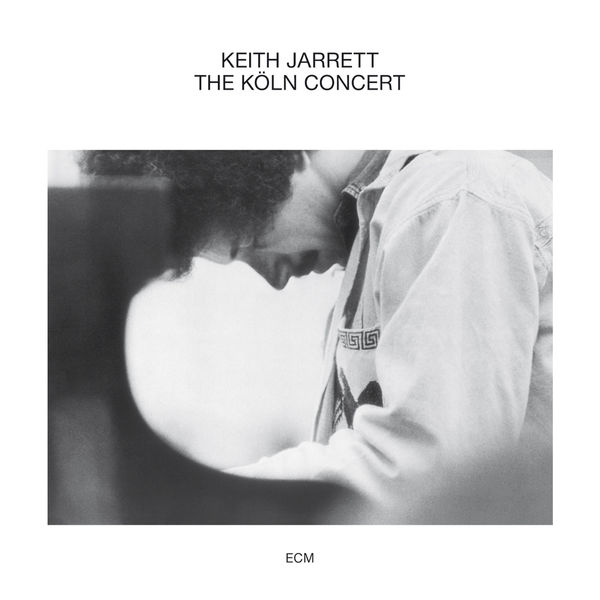
- Label:
- ECM
- Year:
- 1993
- Format:
- 24/96 FLAC
- Source:
- unknown
This is the standard hi-res edition of the Köln Concert
The mastering here clearly aims to improve the lossless: it pushes brighter presentation, adds volume, a makes the soundstage slighty wider. Some of that works. There is more air at the top end and the piano has more presence. But something is also lost. The intimacy of the performance gives way to a sound that feels a little constructed, a little optimised, and the warmth of the lossless narrows in the process. It is not an unpleasant listen, but the adjustments reveal themselves as adjustments rather than disappearing into the music.
Not a bad edition, but the brightening and compression come at a cost. Compared to the lossless, this edition lacks some of the intimacy and warmth that make this performance what it is.
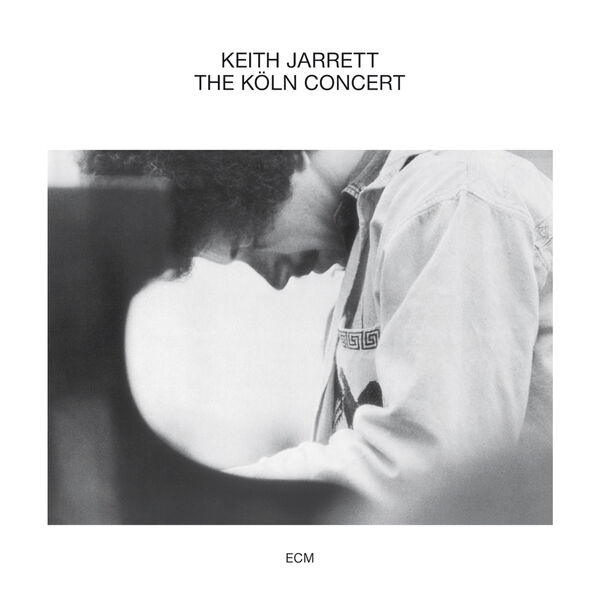
- Label:
- ECM
- Year:
- ?
- Format:
- DSD64
- Source:
- unknown
This is the DSD edition available through Qobuz and several other outlets
This is the loudest and brightest of the three, and the one where the mastering effort is the most audible. The detail retrieval is impressive on first listen: you can hear Jarrett hitting the keys, the pedal mechanism at work, the full texture of the hall. It is immersive in the way that places you right beside the instrument. But over longer listening it starts to work against you. The brightness accumulates, the elevated detail becomes distracting, and what was immersive begins to feel clinical. The qualities that impress initially are the same ones that eventually create fatigue.
If you want the objectively most detailed edition of this recording, this is the one. But if you want to spend an hour inside this performance, I would go for the lossless instead.
Closing notes
Usually, hi-res editions improve on the original. I've covered plenty of such situations in the Index.
But with The Köln Concert, each step up in resolution seems to be doing the exact opposite. The two hi-res editions push brightness, volume, and detail forward.
And yes, at first that sounds like improvement. When hearing the DSD edition for the first time, I was amazed by the detail. It felt genuinely impressive and the sense of physical proximity to the instrument was astonishing.
But the problem is that The Köln Concert is not asking for proximity. It is asking for presence, or immersion, and those are not the same thing. The faulty piano, the hall, the slight softness at the edges of Jarrett's sound as he concentrates on the middle register: all of that is part of what makes this performance so special.
The lossless edition leaves it intact. And that's why I prefer to put this one rather than any of the hi-res editions, purely because of what it does not try to fix.