

Perspectives
Hi-res Is Not the Point
28 May 2026
Many listeners compare hi-res and lossless releases expecting dramatic differences. But the biggest factor shaping what we hear is often not the format at all.
Every few weeks, I see the same discussion happening somewhere online.
Someone decides to compare whether they can hear difference between hi-res and CD-quality file, and declares they can't.
Someone else insists the difference is obvious. According to someone else, you can hear the difference but only if you have good enough equipment. Otherwise, all your efforts to hear it are in vain.
And finally, another person concludes that hi-res audio is little more than a marketing gimmick, since, in fact, us humans can't hear the frequencies it's supposed to include anyway.
The debate goes around in circles for a few days with no resolution of any kind. Eventually everyone moves on until the next time it appears.
The thing is, I think both sides are usually arguing about the wrong thing.
The discussion almost always starts with a question that sounds reasonable:
Can you hear the difference between lossless and hi-res audio?
But the thing is, I don't think think that this is not the most useful question in the discussion.
And it's not because the answer doesn't matter. Not at all. It's because there is a much bigger factor shaping what we actually hear between those two formats, and it has very little to do with the actual format at all.
In other words, that lovely yellow/hold hi-res badge has become the centre of the conversation.
Let me show you why that is wrong.
I think the biggest part of the confusion around the "whether I can hear the difference between hi-res or not" discussion comes from what we expect hi-res audio to do in the first place.
When someone reaches for a hi-res edition of an album, they usually expect that something dramatic should happen.
The music should suddenly open up. They should hear some new details, sounds never before witnessed on this recording. A new instrument line should step forward, and their minds should be blown away by the completely new sonic experience.
And if none of that happens, the conclusion is often clear: "I can't hear any difference." And that pretty much always leads to the inevitable (and such easy to make) claim:
"hi-res is a scam!"
But that expectation is pretty much setting the format up to fail.
Let's face it; a hi-res edition is the same recording as the CD. The same session, same musicians, same compositions, same notes, same takes...
There is no difference.
If the recoding captured crap songs, they remain crap. If the guitar was slightly out of tune, it remains that (unless someone decided to fix it in the post-production, of course, more on which shortly.)
The hi-res version is not secretly hiding another trumpet part that was missing from the CD. It isn't going to reveal a forgotten cymbal hit in the back corner of the studio. Or some new lyrics not present on the first vinyl pressing.
There is nothing new to bring up. No hidden tracks or instrument parts to unearth. And no earth-shattering sonic elements to surface up.
The recording remains the recording.
Which is why I find it helpful to think about hi-res audio in a slightly different way
And I like to use this analogy to illustrate it...
Imagine viewing the same photograph on two different phones.
One has a basic screen. The other has a far better display with greater colour accuracy, smoother gradients, and the ability to show finer detail.
Remember, it's the same photograph. The mountain in the background (or whatever else the image features) is still the same mountain. The sky is still the same sky, and the people standing in the foreground are still the same people.
So, the better phone might present that scene more accurately. The colours might be sharper, and edges less blurred. But it doesn't suddenly add a castle on the horizon that wasn't there before.
It shows the same photograph. Just maybe a little more precisely.
Hi-res audio works in much the same way.
The recording itself does not change simply because it is stored in a higher-resolution format.
The performance does not change. The musicians do not play different notes. The recording does not suddenly acquire new details that never existed in the source.
What changes is the container carrying that information and the amount of information that container is capable of preserving and presenting.
I think the misconception around it is what causes so many listeners feeling disappointed by their first encounter with hi-res audio.
It's because they are listening for the wrong thing.
What hi-res can potentially offer is not something earth-shattering or new. It's more a refined presentation of what is already there.
And yes, sometimes that refinement is meaningful. But equally often, it is subtle. And sometimes it is practically impossible to notice.
And this is where the discussion usually takes a wrong turn.
Because when people compare a CD-quality edition with a hi-res edition, they often assume they are comparing file formats.
In reality, however, they are comparing entirely different editions of the same recording.
See the difference?
When comparing the same album in hi-res and CD quality, you are not comparing two file formats.
You compare different mastering. Perhaps even a different source used for that mastering. And different people (usually, mastering engineers but also, the artists themselves,) making different choices about how the particular edition of the album should sound.
This matters because all these factors don't only affect the sound. They also affect how you perceive the sound, and might or might not make a particular edition sound better or worse to you.
This is why discussions about hi-res audio can become so confusing.
Someone listens to a hi-res release and says it sounds dramatically better than the CD. Someone else compares another hi-res release and hears no difference at all. Another person actually prefers the CD.
And you know what, all three may be correct.
Because the format itself is often only one small part of the story. The larger difference may come from the mastering.
The hi-res edition may have been created from the analog source and then, got heavily processed, compressed, whatever.
The CD may be a direct transfer of an older mastering with almost no additional tweaks applied.
So you think you are comparing 16/44 against 24/96. But what you are often hearing is the result of entirely different decisions made long before the file was ever exported.
In other words, you try to evaluate the container. But what you are actually hearing is the treatment of the music inside it.
And that's also why some hi-res releases can sound worse than their CD counterparts
Shocking, I know but true.
But think about it; hi-res audio can only work with the information that already exists in the source.
If a recording is limited, rough, noisy, poorly preserved, or simply not very well recorded in the first place, a higher-resolution format cannot magically fix those problems.
Sometimes it can make them even more obvious.
Similarly, if the source used for that particular edition isn't great, the result will not be either.
Going back to the screen analogy, imagine taking an old, blurry photograph and displaying it on an expensive modern display.
The better screen will show the photograph more accurately. But it won't make the photograph sharper. If anything, it may reveal the flaws more clearly.
The same thing can happen with recordings.
A higher-resolution release may expose tape noise more clearly. It may reveal limitations in the original recording. It may highlight rough edges that were previously smoothed over.
And if the mastering decisions are poor, the result can be even less enjoyable.
Take Art Blakey's First Flight to Tokyo, for example.
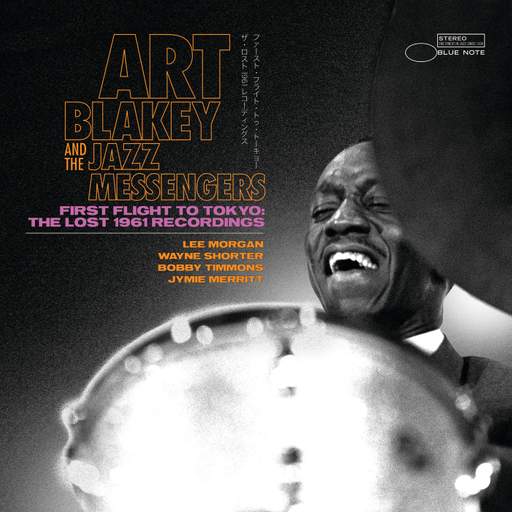
It's a fascinating historical release, the document (supposedly buried somewhere in vaults) of the quintets first visit to Japan.
In the Wayne Shorter documentary I once saw, the artist remembered it as a surreal experience. The quintet was treated like mega stars. In fact, there's an entertaining scene in the documentary,k where Shorter remembers seeing "Wayne Shorter jackets" being sold in stores. Jackets modelled after his favourite outfit.
Crazy, right? So, naturally, a long-lost sonic document of that visit is one hell of a recording.
But ... this was never an audiophile recording. Sonically, it's poor. It's not mono but the narrow soundstage makes it sound almost as if it were. And that's just one of the clear limitations of the source tape.
And so, when I compare the CD and hi-res editions, I actually find the CD easier to enjoy. The hi-res edition not only doesn't bring out any hidden magic in the recording, it just makes the flaws more obvious.
But that's not a failure of hi-res audio. It's simply a reminder that format alone cannot create qualities that were never present in the source to begin with.
The same can be true for two different hi-res editions.
Take the recording of Debussy's String Quartet in G Minor by the wonderful Quartetto Italiano.

My DSD128 copy from HighDefinitionTapeTransfers (HDTT), a small independent label, sounds far more superior than the Warner Classics edition. The edition published by the giant, supposedly with unlimited resources to make such releases sound perfect.
And yet, it is the HDTT edition that sounds breathtaking. It is a new transfer of a high-quality original analog tape, done with care such a recording deserves.
But the Warners sounds as if the mastered from a copy of a copy of a copy of an old cassette tape. It's full of tape hiss, the sound is distant, and lacks any character at all.
Let's look at another example, the most known and revered jazz record of all time, Kind of Blue...
The DSD128 of Miles Davis' "Kind of Blue" from HDTT sounds better than 24/96 by the same label, because their tape transfer master was done in DSD. So, naturally, any lower format editions have been downgraded.
(You can read my comparison of all available digital editions of Kind of Blue here.)
Similarly, the DSD64 edition of Art Blakey's "Moanin'" from BlueNote sounds a million times better than the same bit depth and frequency edition by HDTT.
This time, it's the exact the same format, but the source isn't.
BlueNote is based off the original master whereas HDTT is a tape transfer. Unfortunately, the tape used for that transfer has clearly seen better days, and you can hear it.
(Read my full comparison here.)
And finally, Michal Bryla's "Telemann: 12 Fantasies for Viola Solo" (recently reviewed on TrueResAudio) sounds better in 24/384 than in lower quality purely because it was recorded in that high quality. So, again, any lower editions had to be downgraded sonically. These differences are subtle but they are there.
The right question to ask
I already discussed that asking "Can I hear the difference between 16/44 and 24/96?" is not a good approach to evaluate two editions of the same album.
So what is? Well, I'd suggest you turn this question completely on its head, and simply ask:
"Do I actually enjoy how this edition sounds?"
Because, let's face it; the goal for putting a record on is not to hear a file format. It is to enjoy the music. And if it sounds better in a particular file format then that is the edition you should enjoy.
And yes, I get it; the hi-res badge can feel reassuring. Seeing it beside your favourite record may make you feel like you're getting the best quality but it's illusory. The badge in no way confirms you will enjoy the result.
Only listening to the record can confirm it.
You might prefer it because it feels warmer. Or because it has more clarity, and allows you to enjoy every detail. Or ... well, you get the picture.
And the thing is, none of those preferences are wrong.
And that is another reason the hi-res debate so often becomes unhelpful. It treats sound quality as though there is a single correct answer waiting to be discovered.
In reality, listening is far more personal than that.
So, the better question is not whether a release is hi-res. The better question is whether it gives you the listening experience you are looking for.
And once you start thinking about recordings that way, the format badge suddenly becomes much less important.
Continue the journey
TrueResAudio is built around questions like this.
It's a classical and jazz magazine built around discovery, helping listeners navigate new releases, overlooked catalogue gems, different editions, reissues, and the recordings that keep drawing us back.
Along the way, you'll find reviews, listening notes, digital edition comparisons, and the occasional rabbit hole when a simple question turns out to have a more interesting answer than expected.
If that sounds like your kind of listening, come and have a look around. I think you'll feel right at home.